The Noise I Type and the Quiet I Try to Find
By Caleb Thornton
Chapter One: The Words That Aren't Mine
Most mornings begin the same way. I wake up before the sun, not because I want to, but because I am used to listening carefully. My mind does not sleep deeply anymore. It hovers, like it is waiting for someone to speak. I make coffee in the dim kitchen, the sound of the machine sputtering and clicking, and I think about the day’s docket before I have even tied my shoes.
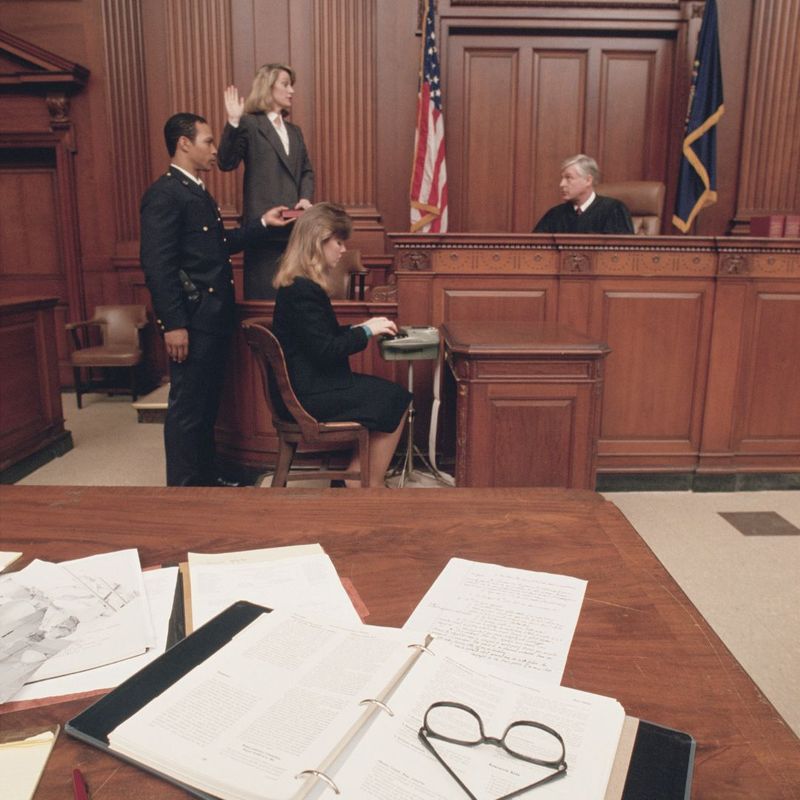
By eight thirty I am seated in family court, fingers resting on the stenotype machine. The room smells faintly of old paper and polished wood. There is always a low hum in the background. Air vents. Shifting chairs. Someone clearing their throat. Then the judge enters and the real noise begins.
I type what people say when they are not at their best. I type accusations. I type pleas. I type long explanations that circle around the same hurt. Custody disputes. Divorce hearings. Protective orders. Each sentence matters. Each pause matters. If the judge says strike that, I strike it. If someone breaks down mid sentence, I capture what I can. I do not decide what stays or goes. I only record.
There is something strange about spending your day inside other people’s conflict. You hear every detail. You hear how they met. You hear what went wrong. You hear who forgot to pick up a child from school and who sent the last text. The stories change every day, but the tension feels familiar. It settles into the room like dust.
I actually like the environment. That may sound odd. There is purpose there. The law moves forward because someone records it faithfully. When I leave the courtroom, I know I helped preserve something important. Still, by late afternoon, my head feels crowded. It is as if I have borrowed a dozen lives and none of them are mine.
The drive home is quiet, but the words follow me. I replay arguments I typed hours earlier. I remember the way one father’s voice cracked when he said he just wanted more time. I remember the way a mother’s hands trembled when she insisted she was doing her best. I am trained not to react. My job is accuracy, not opinion. Yet I carry the tone of it all in my chest.
I used to think I would come home and write something big. A novel maybe. Or essays about the human condition. That sounds dramatic now. Most evenings I can barely decide what to eat for dinner. Starting anything from scratch feels heavy after a day of recording arguments word for word.
The strange thing is that I do not dislike writing. I spend my whole day doing it. I just do not want to invent something complicated. I do not want to wrestle with a blank page that demands brilliance. What I need is a doorway. Something small. Something manageable. That is how I stumbled into writing prompts without even meaning to.
At first it was accidental. I saw a short line somewhere online. It said something simple, like: A man finds a letter in his coat pocket that he does not remember writing. That was it. No pressure. No expectations. Just a starting point. I sat at my kitchen table and typed two paragraphs. Nothing polished. Nothing important. But for the first time all day, the words were mine.
I noticed something almost immediately. When I begin with a small scenario handed to me, my mind does not resist as much. There is less hesitation. I am not staring at emptiness. I am responding. After hours of transcribing heated testimony, responding feels easier than creating.
Even then, I hesitate before I begin. I will open a document and stare at the blinking cursor. It feels silly. The prompt might be simple. A childhood memory. A conversation that never happened. A place you have never been. Still, I sit there longer than I should. Starting is always the hardest part.
Some nights I follow the line closely. I stay inside its edges. I build exactly what it suggests. Other nights I drift. I start with the given idea, then wander into something unexpected. A minor detail becomes the center. A background character takes over. I surprise myself sometimes, which feels rare after a day spent typing outcomes that are already unfolding in front of me.
I am beginning to see that structure does not always trap you. In court, structure is strict. Rules of evidence. Rules of order. Objections sustained or overruled. At home, a small writing prompt is different. It is a frame, not a cage. It gives my mind somewhere to land without forcing it to fight.
I would not say this habit has changed my life. That sounds too neat. I still wake early. I still type arguments that do not belong to me. I still drive home with other people’s words echoing in my ears. But there is a shift. A small one. Instead of feeling completely crowded by the end of the day, I know I have a corner of the evening that belongs to me.
And maybe that is enough for now.
Chapter Two: The Words That Stay
I used to think I was good at leaving work at work. That is something people say proudly, like it is a skill you can train for. Maybe it works in other jobs. In mine, the sentences follow me home whether I invite them or not. They do not shout. They linger. I will be rinsing a plate in the sink and suddenly remember the exact wording of a custody exchange. I will be folding laundry and hear the rhythm of someone explaining why they should not lose visitation rights. I do not remember faces as clearly as I remember phrasing. The shape of a sentence sticks.
There was a case last month that stayed longer than the rest. A teenager stood between her parents and spoke calmly, almost too calmly, about how tired she was of being the reason they argued. I typed every word. My hands moved without pause. Later that night, I could still see the way she kept her eyes on the judge instead of either parent. I kept thinking about what it must feel like to become the subject of your own transcript.
That is the strange part of this work. I am present for turning points in other people’s lives, yet I remain invisible. My name does not appear in the decisions. My voice is never part of the record. I am accurate, neutral, dependable. Those are good things. But sometimes I wonder what my own record would look like if someone typed it out. Would it be steady and careful? Or would it show how often my thoughts overlap and trip over one another?
I started paying attention to that overlap. The mental clutter, I guess you could call it that. It is not dramatic. It is more like having too many browser tabs open at once. Each one hums quietly, asking for attention. Court language. Grocery lists. An unfinished email to my sister. A half formed idea about a story I might write someday. By evening, I feel full but unfocused.
That is when small creative starters began to matter more than I expected. I do not always search for them deliberately. Sometimes I jot down a scenario I overheard in the hallway. Sometimes I invent a single question, like what would happen if two strangers discovered they were arguing about the same memory? It is nothing grand. Just a nudge. A narrative spark that asks me to lean in instead of shutting down.
I have learned that if I wait for inspiration to feel dramatic, I will never begin. After typing testimony all day, my energy is practical, not poetic. So I keep things plain. A situation. A line of dialogue. A simple what if. It gives my mind something to respond to without demanding brilliance. That small shift makes a difference.
There are nights when I open my laptop and feel resistance anyway. I sit there and think about the blinking cursor the same way I think about the judge’s gavel. It signals the start of something that requires precision. I hesitate. I reread the short idea I have chosen. I wonder if it is too simple. Too predictable. Then I remind myself that in court, the simplest statements often carry the most weight.
On better evenings, the act of beginning settles me. I type slowly at first. Not in shorthand, but in full words. I let myself make mistakes. I do not correct every line. That is new for me. My professional life is built on accuracy. At home, I try to allow imperfection. The first draft can be uneven. The pacing can drift. It does not have to withstand cross examination.
I notice that when I start with writing prompts, I am less likely to abandon the page. There is already a direction, even if it is faint. It feels like walking into a room where someone has left the light on. I still choose where to sit, what to look at, what to say. But I am not stepping into total darkness.
Some evenings the story mirrors something I heard in court, even when I do not intend it to. A fictional argument echoes a real one. A child character speaks with the same careful tone as that teenager from last month. I worry about that sometimes. I never use real details. I never lift language. Still, the emotional temperature of my day seeps in. I guess that is unavoidable. We are all shaped by what we hear.
Other nights, the story drifts far away from the courtroom. I might write about a lighthouse keeper who talks to the sea as if it were stubborn and alive. Or a grocery store clerk who memorizes customers by the way they stack fruit on the conveyor belt. Those pieces feel lighter. They stretch parts of me that do not get used between nine and four.
I would not call myself disciplined about this habit. There are stretches when I skip days. A long hearing. A complicated case. Paperwork that piles up. But I keep coming back to it. Not because I am chasing publication or praise. I am chasing quiet. Not silence, exactly. Just a steadier rhythm.
The more I think about it, the more I realize that my job is all about beginnings and endings for other people. A marriage ends. A custody agreement begins. A restraining order is granted. My small writing practice exists in the middle. It is not final. It does not decide anything. It simply opens a door and lets me step through.
I am still figuring out what I want from it. Maybe nothing more than a place where my own sentences can exist without being judged or struck from the record. Maybe that is enough. Or maybe it is the start of something I have not fully admitted yet.
Chapter Three: When the Record Follows Me Home
There are days in court that feel routine. Papers shuffled. Arguments repeated in slightly different wording. Judges patient but firm. And then there are days that land harder. The kind that settle into your shoulders and stay there long after the courtroom empties.
A few weeks ago, we had a custody modification hearing that stretched almost the entire day. No shouting. No dramatic outbursts. Just two parents who were tired of each other and too careful with their language. The father kept saying, “I am not trying to take her away.” The mother kept saying, “I just need stability.” I typed those phrases so many times they lost meaning. Stability. Take her away. Stability. Take her away. By the end of the afternoon my fingers felt like they were pressing the same keys in a loop.
What stayed with me was not what they said. It was what they avoided saying. There were pauses where the air felt thick, like someone had opened a window and then shut it too quickly. I recorded the silence as best I could. A pause. A breath. A correction. The judge leaned forward. The attorneys shuffled papers. I kept typing.
When I drove home that evening, I did not turn on the radio. I usually do. I let someone else talk so I do not have to think. That night I wanted the quiet, but not the crowded kind. Just space. The sky was dim and gray, the kind that makes everything look unfinished.
I sat at my kitchen table later and opened my laptop like I always do. I had scribbled down a small scenario earlier in the week. A man finds an old photograph in a library book and decides to track down the person in it. Normally that would be enough to get me moving. A small imaginative exercise. A clean beginning.
I stared at it for a long time.
It felt thin. Not wrong. Just light in a way I could not enter. My head was still filled with courtroom language. Formal phrases. Careful statements. The scenario on my screen felt like it belonged to someone else.
I closed the document. Opened it again. Closed it once more. I thought about abandoning the habit entirely. It would be easy to say I was too tired. Too mentally full. No one expects a stenographer to go home and keep typing.
That was the first night I understood that my own scattered ideas might not be enough. The small narrative sparks I had been jotting down were helpful on ordinary days. On heavy days, they felt flimsy. I needed something steadier. Something outside my own cluttered thinking.
I did not want to invent another starting line. I did not want to wrestle with possibility. I wanted direction. A clearer framework. Not strict like courtroom procedure, but intentional. I wanted to feel like someone else had already built the doorway and all I had to do was walk through.
It surprised me how much resistance I felt even admitting that. My job trains me to be self sufficient. I record. I organize. I maintain order. Asking for help, even in something small like a creative beginning, felt strange.
I paced my apartment for a while. I rinsed my coffee mug. I checked the clock. The evening was slipping away. If I was going to write at all, I needed to start soon.
That is when I began looking for more structured writing prompts instead of relying on my own uneven notes. Not random lines floating around online. Not vague suggestions. Something organized. Something consistent. I did not want inspiration. I wanted a clear next step.
I remember thinking that it was almost funny. I spend my day inside transcripts that follow strict order. Plaintiff speaks. Defendant responds. Judge rules. And here I was, craving a similar sense of sequence for my own small writing habit.
I did not find what I needed right away. A few lists felt too broad. Some were so abstract they only added to the noise in my head. Others seemed designed for people chasing publication or praise. That was not what I was after. I was looking for something steady. Practical. Something that could hold up on a day when the record would not leave me alone.
I almost gave up that night. I nearly shut the laptop and decided that maybe writing was only for lighter days. But something in me resisted that conclusion. If I only wrote when I felt clear, I would rarely write at all.
So I kept looking.
I did not know then that this search would shift the way I approached my evenings. I only knew that the blinking cursor felt less intimidating than the silence in my own head. And that if I could just find the right starting place, maybe I could build something that belonged to me again.
Chapter Four: A Different Kind of Record
I do not remember exactly how I found it. It was late. The kitchen light was still on even though I had finished dinner an hour earlier. I was sitting at the same spot where I pay bills and sort mail. My laptop was open, tabs scattered across the top like half read case files. I had already closed two lists that felt too vague and one that felt more like a competition than a quiet starting place.
Then I came across a page of writing prompts that felt different from the others. They were simple but specific. Not dramatic. Not showy. Just clear starting points. A conversation that changes direction halfway through. A secret kept for twenty years. A letter written but never mailed. Each one felt grounded, like it understood that the hardest part is not brilliance. It is beginning.
I scrolled slowly. I was not searching for the most original idea. I was searching for steadiness. The kind that does not argue with you. The kind that simply says, start here.
One line caught my attention. It suggested writing about a decision made quietly that later shaped everything. That was all. No dramatic twist. No grand theme. Just a quiet decision.
I thought about the teenager in court weeks earlier. I thought about how calmly she spoke when she asked the judge to stop scheduling hearings around her school exams. It was such a small request. Yet it shifted the tone of the room. A quiet decision.
I began typing before I could overthink it.
Not about her. Not about court. But about a fictional boy who chose to take a bus instead of waiting for someone who always arrived late. I let the story move slowly. I described the way the bus smelled faintly of rubber and rain. I described the worn fabric on the seat beneath him. I let him feel uncertain but determined. It was not complicated. It did not need to be.
For the first time in weeks, I did not hesitate after the opening paragraph. The structure was already there. The direction had been handed to me. I did not have to invent the doorway. I only had to step through it.
That evening did not solve anything dramatic. I still went to bed thinking about court. I still woke before sunrise. But something had shifted in the way I approached the page. Instead of fighting the blank space, I accepted that I work better with a frame.
In court, the frame is rigid. At home, it can be gentle. A short creative cue. A structured starting point. A defined scenario that narrows the field just enough to quiet the noise.
I began returning to that page on heavier days. Not every night. I did not want the habit to feel like another obligation. But when my own ideas felt scattered, I let someone else’s outline steady me. I noticed that the more I practiced beginning this way, the less I feared the first sentence.
There were still evenings when I drifted away from the original line. Sometimes halfway through I would veer into something unrelated. That was fine. The initial direction had done its job. It got me moving. It cleared a small path through the clutter.
I started to understand something about myself that I had not seen clearly before. I do not struggle with writing. I struggle with starting. Once the rhythm takes hold, I can follow it. But the moment before that, the blankness, feels louder than any courtroom argument.
These writing prompts did not add noise. They reduced it. They gave my mind one thing to focus on instead of ten. After a day spent capturing every objection and response, narrowing my attention felt almost restful.
I still keep a notebook of my own ideas. I still jot down overheard phrases and small scenarios. But now I know I do not have to rely solely on what I can invent at the end of a long day. There is relief in that. Not dependency. Just relief.
Some nights I write two pages. Some nights only half of one. The point is not output. The point is that my own words exist somewhere outside the courtroom record.
Chapter Five: What Belongs to Me
The courtroom has a rhythm that never changes. The bailiff calls the room to order. The judge nods. Attorneys stand and sit in careful sequence. My hands move without hesitation. There is comfort in that predictability. Even the tension follows familiar patterns. Someone speaks too quickly. Someone objects. Someone apologizes. The structure holds.
What surprised me over the past few months is how much I began to crave a similar rhythm outside of work. Not rules. Not procedures. Just something steady. Something that belongs to me.
I started noticing small shifts in my evenings. Instead of pacing the apartment replaying arguments, I would sit down with intention. Not dramatic intention. Just quiet commitment. I would choose a starting line and let it guide me. Sometimes the line came from my own notebook. Sometimes from that collection of writing prompts I had begun returning to when my thoughts felt too tangled.
The difference is subtle but real. When I begin with a defined scenario, my mind does not wander as much toward the day’s hearings. It has somewhere to land. A character to follow. A setting to build. I do not erase the courtroom from my memory. I simply give my attention another job.
There was an evening recently when the habit proved itself again. We had a difficult case involving relocation. A mother wanted to move out of state for a job opportunity. The father insisted it would disrupt the child’s stability. The word stability surfaced again and again, just like before. I typed it so often it felt mechanical.
That night, instead of collapsing onto the couch, I sat at the table and opened my laptop. I chose a prompt about a family deciding whether to leave a town they had lived in for generations. The overlap with court was obvious. I almost closed it. But I stayed.
I let the fictional family argue gently. Not cruelly. Not dramatically. Just thoughtfully. I let them weigh opportunity against familiarity. I described the creak of the old porch steps. The way the kitchen window faced west and caught the evening sun. The ache of leaving something known.
Halfway through writing, I realized I was breathing differently. Slower. Not because the story was calming. It was still about conflict. But it was conflict I could shape. Conflict that would not be ruled on by a judge at the end of the day.
That distinction matters more than I expected. In court, the story moves toward a decision I do not control. At home, the page moves toward a choice I can revise, rethink, or undo entirely. I can let a character hesitate without consequence. I can allow ambiguity. That freedom feels foreign at first, almost reckless. Then it feels necessary.
I have also begun to notice that starting has become less intimidating over time. The hesitation is still there, but it no longer stops me. I know that if the first paragraph feels awkward, it will smooth out. If the idea feels thin, it can thicken. The act of beginning no longer feels like stepping into a void.
That may be the quiet lesson underneath all of this. My job has trained me to respect precision. It has also trained me to believe that every word must carry weight. At home, I am learning that words can simply exist. They do not always have to serve as evidence.
I would not describe myself as a different person because of this habit. I still wake early. I still type transcripts faithfully. I still leave the courtroom with phrases echoing in my head. But I no longer feel entirely defined by the words I record.
There is a second record now. One that does not belong to the state or to the court. It belongs to me. It holds fictional bus rides, hesitant families, strangers on lighthouses, grocery clerks with careful habits. It holds versions of conflict that bend and soften instead of harden.
I sometimes imagine what it would be like if someone else typed out my evenings the way I type out other people’s days. They would see the pauses. The revisions. The moments when I hover over the delete key and decide not to press it. They would see that beginning is still the hardest part.
But they would also see that I begin anyway.
And that feels important.
Chapter Six: Beginning Again Tomorrow
I sometimes wonder how long I will stay in family court. People assume stenographers are drawn to the work because they enjoy language. That is partly true. I respect words. I respect the way they shape decisions. But what I did not expect when I chose this path was how much of myself would stay quiet during the day.
There is no room for my opinions in a transcript. No space for commentary. I capture what is said and leave the rest alone. It is honorable work. Necessary work. Still, by late afternoon, I often feel like a vessel that has been filled with other people’s urgency.
That is why the small act of choosing from writing prompts continues to matter more than I first realized. It is not dramatic. It does not make headlines. No one applauds when I finish a page. But it restores something subtle. It reminds me that language can belong to me, not only to the record.
The hesitation has not vanished entirely. Even now, months into this habit, I sometimes sit down and feel the old resistance. The blank page still carries weight. I still think about whether the idea is strong enough, interesting enough, worth my time. Then I remember that the point is not strength. The point is motion.
I have learned that beginning rarely feels convenient. It rarely feels inspired. More often it feels ordinary. A small decision made at a kitchen table while the sink is still full of dishes. A choice to type a first sentence instead of scrolling through the news. A willingness to accept that the first draft might be uneven.
On particularly heavy days, when the courtroom has been tense and the arguments sharp, I rely on that structure even more. I do not force myself to invent something large. I let the outline carry part of the weight. A defined scenario. A clear starting point. Something that narrows my attention just enough to quiet the mental clutter.
What surprises me is that this practice has begun to affect how I move through my workday as well. I still type with precision. I still capture every objection and ruling. But I no longer feel as though I am only absorbing conflict. I know that later, when I sit down at home, I will shape something of my own. That quiet expectation changes the tone of the day in a way I did not predict.
I think often about that teenager who asked for her hearings not to interfere with school exams. Her request was small but firm. She did not raise her voice. She did not dramatize her situation. She simply began speaking. That image stays with me. Sometimes beginning is less about confidence and more about decision.
My evenings now feel less like recovery and more like continuation. The stories I write are not grand statements about justice or family or law. They are modest. Focused. Sometimes even unfinished. But they belong to a second record that runs alongside the official one.
I do not know where this path leads. Maybe nowhere public. Maybe to a drawer full of printed pages. Maybe to something I cannot yet name. That uncertainty does not trouble me the way it once did.
Tomorrow morning I will return to the courtroom. I will sit in my usual seat. I will rest my fingers on the stenotype machine and wait for the first words of the day. I will capture them faithfully.
And tomorrow evening, when the house is quiet and the coffee mug sits beside my laptop, I will choose a starting place and begin again.